Data-Driven Risk Management: The Future is Here
The era of reactive risk management waiting for a crisis to occur before formulating a response is officially over.
Read MoreDecember 18, 2023
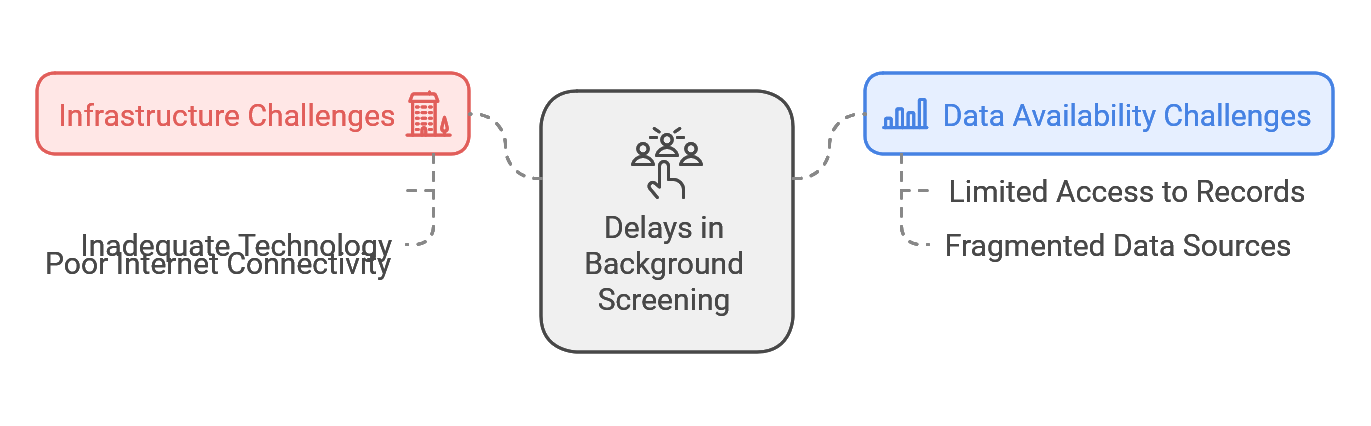
Background screening processes in Africa may face delays due to various factors compared to more developed countries. These factors can be categorized into two main areas: infrastructure and data availability.
 Limited Access to Technology
In many African countries, access to technology and reliable internet connectivity is limited. This can hinder the efficient collection, processing, and verification of background check information.
Many African countries lack the infrastructure and expertise to effectively manage and store large volumes of data, including criminal records, education verification, and employment history.
Data related to background checks may be scattered across various government agencies, educational institutions, and employers, making it challenging to consolidate and verify information.
 Incomplete or Inaccurate Records
Criminal records, education records, and employment records may be incomplete or inaccurate in many African countries due to historical factors, resource constraints, and inconsistent record-keeping practices.
Background check information may not be standardized across different countries or even within the same country, making it difficult to compare and verify data.
Verifying information, such as educational qualifications or employment history, may be difficult due to a lack of centralized databases or direct contact with relevant institutions.
These challenges can lead to delays in background screening results, which can impact employment decisions, visa applications, and other processes that rely on verified background information. To address these issues, African countries need to invest in infrastructure, improve data collection and management practices, and implement data standardization initiatives. Additionally, collaboration among government agencies, background screening associations, educational institutions, and employers can facilitate information sharing and improve the efficiency of background screening processes.
Security Consulting
The era of reactive risk management waiting for a crisis to occur before formulating a response is officially over.
Read More
Security Consulting
For businesses in Nigeria and across the globe, understanding and mitigating physical risks has never been more critical.
Read More
Protective Intelligence
Should ordinary citizens take up arms to defend themselves? On the surface, it seems a simple, visceral answer to a complex problem.
Read More